"Zero Fees" Isn't Free: The Hidden Costs of Popular Investing Apps (And What to Use Instead)
Robinhood, Webull, and other "free" investing apps aren't actually free — they're just charging you in ways that don't show up as a line item. From payment for order flow to cash sweep programs designed to pocket your idle money, these hidden costs quietly erode your returns while you think you're saving. Here's exactly what to watch for, and what serious investors use instead.
5/14/202610 min read
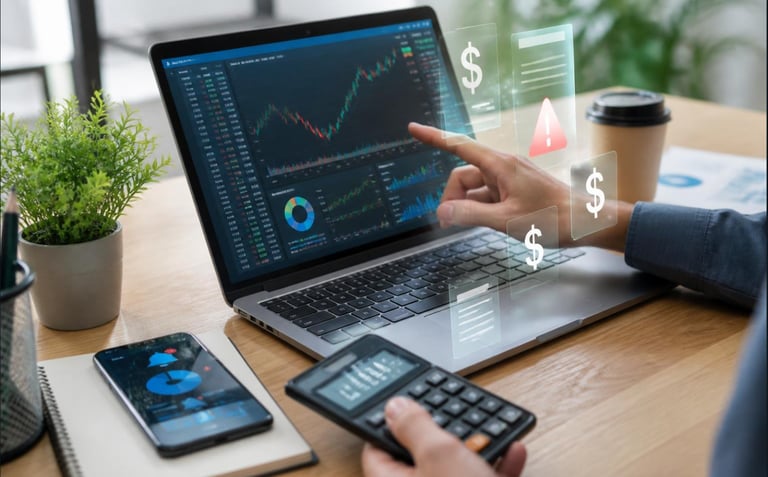

A 2015 analysis of one major platform found that its high cash allocation could create a bigger performance drag than competitors' management fees. Another case showed how zero-fee platforms still profit by holding your uninvested cash and paying you minimal interest while earning much more themselves. Understanding these hidden costs helps you make smarter choices about where to invest your money.
This audit breaks down exactly how free investing apps make money, what it costs you, and how to protect your portfolio. You'll learn which hidden fees to watch for and how to spot when an app's design is working against your financial goals.
Key Takeaways
Free investing apps make money through payment for order flow, cash sweeps, and features designed to increase your trading frequency
Hidden costs like high cash allocations and poor execution prices can exceed the fees charged by traditional investment platforms
You can protect yourself by understanding how your app generates revenue and choosing platforms with transparent fee structures
How 'Free' Investing Apps Actually Make Money
The most expensive thing in investing isn't a trading fee — it's a hidden one you never see coming. "Free" investing apps have built billion-dollar businesses on exactly that principle: charge investors nothing upfront, then quietly collect on the back end through order routing, idle cash, and platform design engineered to make you trade more often than you should. Before you assume your brokerage is actually working for you, here's what's really happening under the hood.
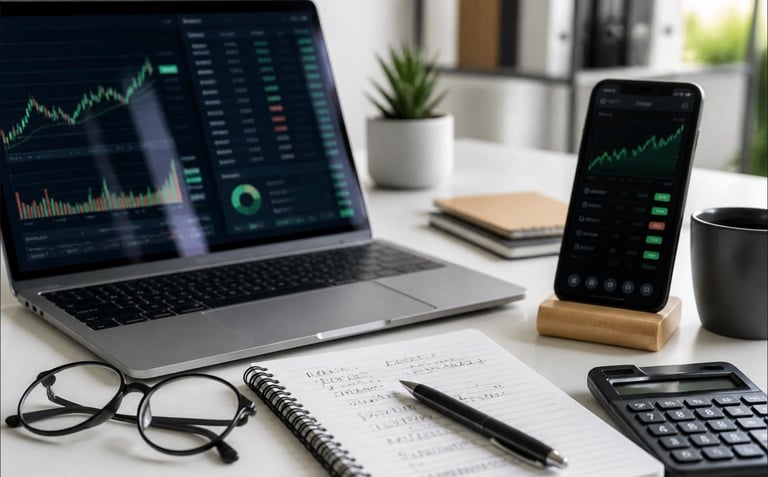

Free investing apps generate revenue through multiple channels that aren't always obvious to users. These platforms rely on payment for order flow, premium subscriptions, interest on uninvested cash, and investor funding to cover costs while offering zero commission trades.
Revenue Models of Fintech Platforms
Payment for order flow is the primary way most free investing apps earn money. When you place a trade, your order gets sent to a market maker who pays the app for that order. The market maker profits from the difference between buy and sell prices.
Interest on your uninvested cash provides another revenue stream. Your money sits in your account waiting to be invested, and the app earns interest on those funds. You typically receive little to no interest yourself.
Common revenue sources include:
Payment for order flow from market makers
Interest earned on uninvested cash balances
Securities lending programs using your holdings
Selling anonymized user data and behavior patterns
Cross-selling financial products like credit cards or loans
Some apps also generate income by lending out the securities you own to short sellers. This happens automatically unless you opt out, and you may receive a small portion of the lending fees.
Zero Commission Versus Hidden Fees
Zero commission means you don't pay a direct fee per trade. But this doesn't mean trading is truly free. The hidden costs show up in execution quality and pricing.
When your order goes through payment for order flow arrangements, you might not get the best available price. The difference between what you pay and the best market price is called slippage. Over time, these small amounts add up.
Your brokerage might also charge fees for specific actions. Wire transfers, paper statements, account closures, and regulatory fees still apply. These costs aren't advertised as prominently as the zero commission feature.
Subscription and Premium Service Costs
Many fintech platforms offer tiered pricing models. The basic version is free, but premium features require subscription fees ranging from $5 to $50 monthly.
Premium subscriptions typically include real-time market data, advanced charting tools, research reports, and higher interest rates on cash. Some apps also offer priority customer support or access to IPOs. These features appeal to active traders who want more than basic functionality.
The subscription model creates predictable revenue while keeping the entry barrier low. You can start for free and upgrade as your needs grow.
The Role of Venture Capital in Driving Monetization
Venture capital funding allows free investing apps to operate at a loss while building their user base. VC funding covers operational costs until the platform reaches enough users to become profitable.
This growth pressure from investors creates specific behaviors. Apps need to maximize user acquisition and engagement to justify their valuations. This leads to features designed to increase trading frequency rather than long-term investing success.
The need to satisfy investors eventually pushes platforms toward monetization. As VC funding slows, apps must find ways to generate revenue from their existing users. This explains why many platforms gradually introduce premium features or increase less visible fees over time.
Real Hidden Costs and Investor Impact
Free investing apps attract millions of users with zero-commission promises, but the real costs show up in trade execution quality, fund expense ratios, and plan structures. Understanding where these platforms actually make money helps you protect your returns.
Order Execution Quality: Bid-Ask Spread and Price Improvement
When you place a trade on a free app, the platform often sells your order to market makers instead of routing it directly to exchanges. This practice is called payment for order flow. Market makers profit from the bid-ask spread, which is the difference between what buyers pay and sellers receive.
The bid-ask spread might seem small, but it adds up quickly. If you're trading a stock with a $0.05 spread and you buy 100 shares, you immediately lose $5 in value. Some platforms get worse execution prices than others, meaning you might pay more per share than necessary.
Price improvement is supposed to help you get better prices than the posted bid or ask. However, free apps often deliver less price improvement compared to traditional brokers. Your $10,000 trade might cost you an extra $10 to $50 in hidden spread costs depending on the stock and platform.
The Expense Ratio Dilemma in Mutual Funds and ETFs
Expense ratios are annual fees that mutual funds and ETFs charge to cover operating costs. These fees get deducted from your returns automatically, so you might not notice them. A fund with a 1% expense ratio costs you $100 per year for every $10,000 you invest.
Free investing apps sometimes push higher-cost funds because they earn more from them. Compare expense ratios before investing. Index funds typically charge 0.03% to 0.20%, while actively managed funds might charge 0.50% to 2.00%.
Over 20 years, a 1% difference in expense ratios can cost you thousands of dollars. If you invest $10,000 with 7% annual returns, a fund with a 0.10% expense ratio grows to $36,500, while one with a 1.10% expense ratio only reaches $30,800.
Direct vs Regular Plans: Commissions and Expense Ratios
Mutual fund companies offer two versions of the same fund: direct plans and regular plans. Direct plans have lower expense ratios because they don't include distributor commissions. Regular plans include these commissions, which the app or broker earns for selling you the fund.
The difference matters more than you think. A direct plan might charge 0.80% while the regular version charges 1.50%. That 0.70% difference goes to the platform, not toward managing your money.
Many free apps default to regular plans without clearly explaining the cost difference. You're paying ongoing commissions through higher expense ratios every single year. Always choose direct plans when available to keep more of your returns.
Account Maintenance and Miscellaneous Fees
Free apps often charge fees that only appear in specific situations. Inactivity fees hit accounts that don't trade regularly. Wire transfer fees apply when you move money out. Paper statement fees charge you for physical records.
Account minimums and balance requirements create another hidden cost. You might need to maintain $500 or $1,000 to avoid monthly fees. Read the fee schedule carefully before opening an account to understand what actions trigger charges.
Psychology, Behavioural Nudges, and Conflicts of Interest
Free investing apps use psychological tricks and nudges to influence your behavior in ways that boost their revenue. These techniques create information asymmetry where the app knows more about how to profit from your actions than you realize.
In-App Nudges and Notifications Driving Cross-Selling
Your investing app sends you carefully timed notifications that aren't just helpful reminders. These nudges use insights from behavioural economics to push you toward products that increase your customer lifetime value to the company.
You might get a push notification saying "Complete your portfolio" or "You're missing out on crypto." These messages use social pressure and urgency to make you feel like you need additional products. The app knows that people respond to loss aversion and fear of missing out.
The timing matters too. Apps often send notifications after market moves or when you've had a winning trade. You're more likely to take risks or try new products when you're feeling confident. This isn't random - it's designed to maximize cross-selling opportunities.
Common nudge tactics include:
Badges or progress bars showing "portfolio completion"
Comparison to what "similar investors" are buying
Limited-time offers on premium features
Celebratory messages after gains that suggest leveling up
Upselling of Margin, Credit, and Insurance Products
Free apps make significant money by upselling you to margin accounts, credit lines, and insurance policies. These products generate ongoing revenue through interest charges and premiums.
Margin products get promoted as tools to "maximize your buying power" without emphasizing the risks of trading with borrowed money. The app might show you how much more you could invest with margin, but the interest costs appear in fine print.
High-margin products commonly pushed:
Personal loans branded as "portfolio lines of credit"
Margin accounts with interest rates of 6-12%
Cash management accounts that earn the app interchange fees
Insurance policies where the app gets referral commissions
Portfolio management services represent another upselling opportunity. You start with free trades but then get nudged toward paid advisory services or automated portfolios with management fees.
How Apps Encourage Overtrading and Riskier Behavior
Apps profit when you trade more frequently, so they use psychological triggers to encourage overtrading. Gamification features like confetti animations, streak counters, and leaderboards make trading feel like entertainment rather than serious financial decisions.
You get instant feedback and easy execution, which removes the natural friction that used to make people think twice before trading. The psychological barrier to buying or selling drops to nearly zero.
The apps also nudge you toward riskier assets because these generate more trading activity and revenue. Options trading, cryptocurrency, and leveraged ETFs appear prominently in the interface. Meanwhile, boring buy-and-hold strategies get less attention even though they typically produce better long-term results for most investors.
Your trading data helps the app understand your risk tolerance and emotional triggers. This information gets used to send you personalized nudges at moments when you're most likely to act impulsively.
Protecting Yourself: Smarter Choices and Reducing Fee Drag
Cutting hidden costs starts with knowing what to look for and making informed choices about where you invest your money. Small differences in fees can cost you thousands of dollars over time, so learning how to spot and avoid unnecessary charges protects your long-term returns.
Understanding Fee Structures Before You Invest
Read the fee disclosure documents before putting money into any investment. Investment apps must show you their fees, but they don't always make them easy to find. Look for terms like "payment for order flow," "interest on uninvested cash," and "premium subscriptions."
Subscription fees for premium features can add up quickly. Some apps charge $5 to $15 per month for research tools, advanced charts, or faster trades. Calculate whether these features actually help you make better investment decisions. If you pay $10 monthly, that's $120 per year—money that could be invested instead.
Check if your app earns money from your cash balance. Many investing apps hold your money in accounts that pay you little or no interest while they earn higher rates. This difference is a hidden cost that drains value from your portfolio.
Ask about trading costs beyond commissions. Wider bid-ask spreads, market impact from poor order routing, and timing delays all affect your returns even when trades are technically "free."
Prioritizing Investor Education and Transparency
Learning how fees work gives you power to make better choices. Financial advice should include clear explanations of all costs, not just sales pitches for products with high fees. If an advisor can't explain their fee structure in simple terms, that's a red flag.
Free educational resources from libraries, nonprofit organizations, and government websites help you understand investing without paying for courses. Your local library might offer access to financial planning software, investment research tools, and personal finance books.
Investor education helps you spot marketing tricks that hide real costs. Apps that advertise "zero fees" often make money in other ways. Understanding these business models helps you ask the right questions before signing up.
Look for apps and brokers that publish clear fee schedules and explain how they make money. Transparency matters because it shows they respect you as a customer. Companies that hide their fee structures in legal documents often charge more than those who display costs upfront.
Strategies to Minimize Long-Term Hidden Costs
Choose low-cost index funds and ETFs when possible. These investments typically have expense ratios under 0.20% and track market performance without paying for expensive fund managers. Over decades, lower fees translate directly into higher returns for you.
Review your investment costs at least once per year. As your portfolio grows, even small percentage fees become bigger dollar amounts. Calculate how much you're actually paying in fees by multiplying your total investment value by your expense ratios and other costs.
Avoid frequent trading, which increases costs through spreads and potential tax bills. Buy-and-hold strategies reduce trading friction and give your investments time to grow. Each unnecessary trade chips away at your returns.
Consider moving accounts if you find lower-cost alternatives. Many investors stick with expensive platforms out of habit. Switching to a broker with lower fees takes some effort but saves money every year going forward. Just watch for any exit fees before you move your investments.
Use tax-advantaged accounts like 401(k)s and IRAs to reduce tax drag. These accounts let your money grow without annual tax bills, which compounds your returns faster over time.
Conclusion
Free investing apps aren't actually free. You're paying through hidden costs that chip away at your returns over time.
The revenue has to come from somewhere. These apps make money through payment for order flow, selling your data, securities lending, or pushing you toward products that earn them commissions. Each of these methods takes money out of your pocket in different ways.
The real costs you face include:
Higher expense ratios on regular mutual fund plans vs. direct plans
Worse execution prices on your trades
Privacy risks from data sales
Pressure to trade more often than you should
Hidden fees buried in terms and conditions
You need to look beyond the "zero commission" marketing. The total cost of ownership matters more than upfront fees. A platform charging a small transparent fee might actually save you money compared to a "free" app with indirect costs.
Before choosing an investment app, do your homework. Read the fine print about how they make money. Compare the actual expense ratios and execution quality. Think about whether the app's design encourages good investing habits or pushes you to trade constantly.
Your investment returns compound over decades. Even small hidden costs can reduce your wealth by thousands or tens of thousands of dollars over time. Choose platforms that align with your long-term financial goals, not just ones that look cheapest at first glance.
Contact
kbgholston445@gmail.com
© 2025. All rights reserved.