Dividend Trap Stocks to Avoid 2026: 5 High-Yielders That Will Cut
High dividend yields look tempting—until they get cut. I'll show you 5 dividend trap stocks to avoid, the warning signs, and safer alternatives that won't cut.
1/18/202610 min read
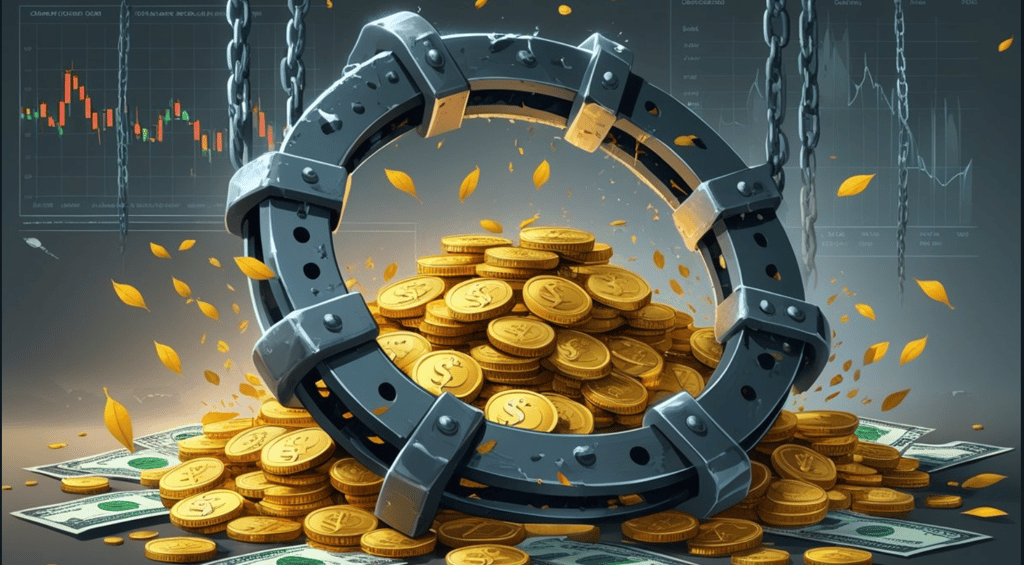
You might think you're being smart by chasing those juicy yields, but companies offering unusually high dividends are often waving red flags that many investors miss. The truth is that not all dividend stocks deserve a place in your portfolio, and some popular names that look safe are actually ticking time bombs ready to wreck your retirement plans. Your income stock shouldn't crash and burn just when you need it most.
The good news is that dividend traps are avoidable once you know what to look for. This article will show you how to spot the warning signs before they cost you money, which popular stocks are in the danger zone right now, and how to build a portfolio that actually delivers sustainable income instead of empty promises.
Key Takeaways
Dividend traps lure investors with high yields that mask financial problems and lead to dividend cuts and capital losses
Popular dividend stocks can be risky investments if their high yields are unsustainable due to weak business fundamentals
You can protect your income by doing proper research and focusing on companies with stable earnings and reasonable payout ratios
Understanding The Dividend Trap: How Popular Stocks Can Destroy Your Income


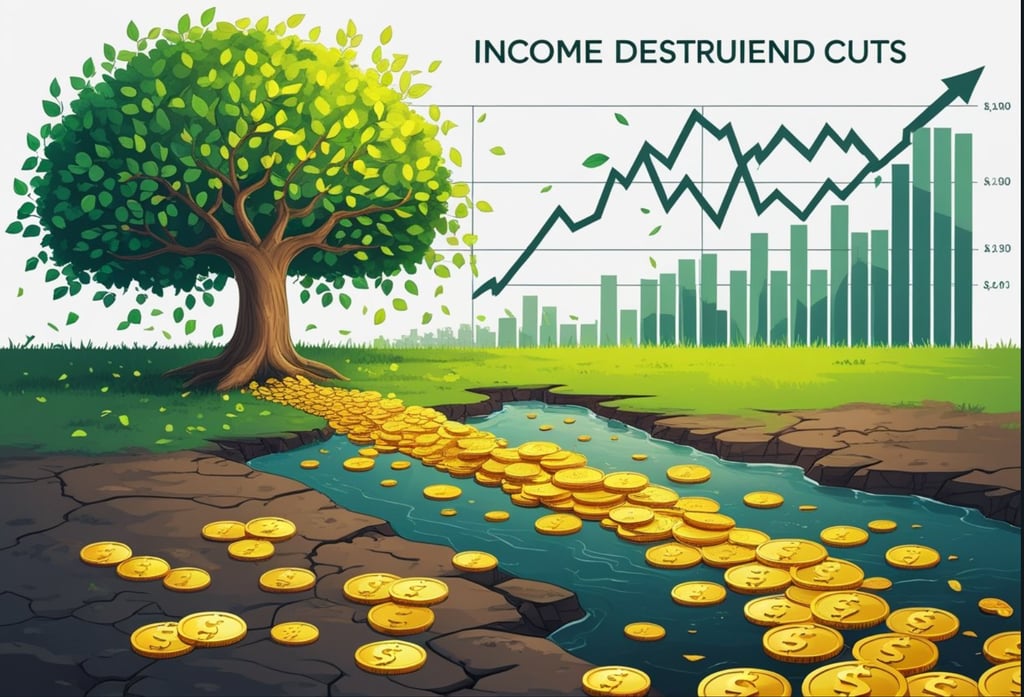
Dividend stocks can seem like a dream come true for income investors, but that dream can quickly turn into a nightmare. A dividend trap happens when a stock offers a high yield that looks attractive but hides serious problems underneath, leading to dividend cuts and falling share prices that destroy both your income and your wealth. When you buy a stock with a 12% yield and the company slashes the dividend in half while the stock price drops another 30%, you're left with less income and a big loss on your investment.
A dividend trap happens when a stock's high yield masks serious financial problems that eventually lead to dividend cuts and falling share prices. These investments look attractive on the surface but end up costing you money instead of providing reliable income.
What Is A Dividend Trap (And Why You Should Flee Screaming)
A dividend trap is a stock that tempts you with an unusually high dividend yield, only to pull the rug out from under your feet later. The stock price drops sharply because the company is struggling financially. Then the dividend gets slashed or eliminated completely.
You might think you're getting a great deal when you see a 7%, 10%, or even 20% yield. But here's what's really happening: the high yield exists because the stock price has already fallen. Other investors have figured out the company is in trouble and sold their shares.
Dividend traps are especially dangerous because you lose twice. First, your income stream disappears when the company cuts its dividend. Second, the stock price crashes even further when the cut is announced.
The Lure Of High Dividend Yield: Too Good To Be True?
High dividend yields work like bait on a hook. You see a stock paying 15% while most stocks pay 3-9%, and your brain starts calculating all that passive income. The math looks amazing until reality hits.
The problem is that dividend yield is calculated by dividing the annual dividend by the stock price. When a stock price drops from $100 to $50, the yield automatically doubles even though nothing improved at the company. That 15% yield might just mean the stock has fallen 60% this year.
Companies in real trouble often keep paying dividends even when they can't afford it. They know investors will sell if the dividend gets cut. So they keep writing checks until they absolutely can't anymore.
Most people never learn how to assess financial risk in traditional education — and that’s exactly why dividend traps exist. 📓Why They Didn’t Teach Me This In School? fills that gap.
Classic Signs Of A Dividend Trap
Watch for these warning signals that scream dividend trap:
Payout ratio above 80%: The company is paying out most or all of its profits as dividends, leaving no money for growth or emergencies
Declining revenue or profits: Sales are falling but the dividend stays the same
Rising debt levels: The company is borrowing money to maintain its dividend payments
Industry in decline: The entire sector is struggling with permanent changes
Dividend hasn't grown in years: Healthy companies increase dividends over time
Your best defense is checking the payout ratio first. This shows what percentage of profits goes to dividends. If a company earns $1 million but pays $900,000 in dividends, that's a 90% payout ratio and a massive red flag.
Also look at the company's cash flow, not just reported earnings. A business needs actual cash to pay dividends.
The Mechanics Of Income Destruction: How Dividend Cuts Happen
When companies slash their dividends, it's rarely a surprise to those paying attention—the warning signs were flashing like a broken neon sign. Understanding payout ratios, dividend cover, and free cash flow helps you spot trouble before your income stream turns into a trickle.
Dividend Cut Domino Effect
You buy a stock at $20 because that juicy 12% yield looks like easy money. Then the company announces a dividend cut, slashing payments in half. Your income drops, but that's just the beginning of your problems.
The stock price usually crashes after a dividend cut announcement. Other investors panic and sell, pushing shares down another 30% or more. Now you're stuck with half the income you expected and watching your $20 investment sink to $14.
Your losses pile up in two ways:
Lost income from reduced or eliminated dividend payments
Capital destruction as the share price tanks
Even if the company eventually recovers, you've lost years of potential gains and income. You're hemorrhaging money while waiting for a turnaround that might never come. The dividend cut domino effect doesn't just hurt—it can wreck your entire income strategy.
The Role Of Free Cash Flow In Dividend Sustainability
Profits on paper don't pay your bills—cash does. A company might report healthy earnings while having terrible free cash flow, and that's where sustainable dividends live or die.
Free cash flow represents actual cash left over after covering operating expenses and capital expenditures. This is the real money available for dividend payments. Companies can manipulate earnings through accounting tricks, but cash flow is much harder to fake.
Check these warning signs:
Free cash flow consistently below dividend payments
Rising debt levels to fund dividends
Shrinking cash reserves quarter after quarter
When free cash flow doesn't cover the dividend, management is raiding the piggy bank or taking on debt to maintain payments. That's unsustainable, and the dividend cut is coming—it's just a matter of when. Smart investors compare annual free cash flow to total dividend payouts before buying anything with a tempting yield.
Popular Dividend Stocks In The Danger Zone: Names And Notorious Offenders
Some well-known companies have already stumbled into dividend trouble, while others are teetering on the edge. AT&T and Apollo Tactical Income Fund stand out as cautionary tales, and certain sectors keep appearing in the danger zone with alarming frequency.
Famous Recent Yield Traps (T, AFT, And Their Friends)
AT&T (T stock) became the poster child for dividend disasters when it slashed its payout by nearly 50% in 2022. The telecom giant had maintained its dividend for decades, but mounting debt and the WarnerMedia spin-off forced management's hand. Shareholders who bought T stock for its juicy 7% yield suddenly found themselves with half the income and a stock price that dropped like a rock.
Apollo Tactical Income Fund (AFT) offers another cautionary tale. This closed-end fund attracted income hunters with its double-digit yield, but the high payout came from unsustainable sources. When market conditions shifted, AFT cut its distribution multiple times, leaving investors with both reduced income and capital losses.
Walgreens Boots Alliance joined the club in 2024 when it cut its dividend by 48%. The pharmacy chain had paid dividends for 90 years straight, but retail struggles and pharmacy reimbursement pressures made the payout unsustainable. Your neighbor who bragged about Walgreens being a "safe" dividend stock probably isn't bragging anymore.
Sector Spotlight: Energy, REITs, And That One Telecom Stock Your Uncle Loves
Energy companies are serial offenders in the dividend trap game. Oil and gas producers love to boost payouts when crude prices soar, then slash them when prices crash. ExxonMobil held steady, but smaller players like Devon Energy and Pioneer Natural Resources have yo-yoed their dividends based on commodity prices.
Real estate investment trusts face their own challenges in 2026. Office REITs are struggling with empty buildings as remote work persists. Shopping center REITs battle against e-commerce. When rental income drops, these companies can't maintain their mandatory 90% payout requirements without cutting distributions.
Telecom stocks remain your uncle's favorite "reliable" investment, but the sector is littered with dividend traps. Beyond AT&T's dramatic cut, Verizon carries concerning debt levels while competing in expensive 5G buildouts. Lumen Technologies slashed its dividend to essentially zero after years of declining revenue.
Case Study: The Double-Whammy Of Dividend Cuts And Share Price Plummets
The math behind dividend traps gets ugly fast. Let's say you bought a stock at $20 with a 12% yield, collecting $2.40 per share annually. The company announces a 50% dividend cut. Your income drops to $1.20 per share.
But the pain doesn't stop there. The market punishes dividend cutters harshly. Your $20 stock might plummet to $12 within days of the announcement. You're now sitting on a 40% capital loss plus half your expected income gone.
AT&T shareholders experienced exactly this scenario. The stock traded around $30 before the dividend cut announcement in 2021. By mid-2022, T stock had fallen below $18. Investors lost both their generous dividend income and roughly 40% of their principal. Recovery takes years, if it happens at all.
The downside risk extends beyond the initial drop. These stocks often underperform for years as investors avoid them and management rebuilds credibility. You're stuck holding a wounded investment while watching your friends' diversified portfolios grow.
Avoiding The Trap: Due Diligence, Portfolio Strategy, And Sustainable Dividends
The difference between a reliable income stream and a financial disaster comes down to homework, smart diversification, and knowing what actually makes a dividend sustainable. You can't just chase the highest yield and hope for the best.
Due Diligence: The Superpower You Need (And Don't Always Use)
Due diligence isn't glamorous, but it's the only thing standing between you and a dividend disaster. You need to check the payout ratio first. If a company pays out more than 65% of its earnings as dividends, that's a red flag waving at you like a desperate tourist.
Look at the company's free cash flow. Cash is what actually pays dividends, not accounting profits. A company can show profits on paper while bleeding cash in reality.
Check the debt levels too. High debt means the company might have to cut dividends when times get tough. You should also look at the company's dividend history. Has it cut dividends before? Companies that have maintained or grown dividends for years tend to keep doing it.
Don't just trust what you read on InvestorPlace or similar sites without verifying the numbers yourself. Pull up the actual financial statements if you can. It takes 20 minutes and could save you thousands of dollars.
Smart Portfolio Construction: Diversification And Dividend Growth
Don't put all your eggs in one high-yield basket. A proper dividend portfolio spreads risk across different sectors and company sizes. You should aim for at least 15-20 different stocks if you're building your own portfolio.
Focus on dividend growth too instead of just high current yields. Companies that raise dividends every year usually have stronger businesses than those offering sky-high yields that never change. A stock yielding 3% that grows 10% annually beats a 7% yield that stays flat or gets cut.
Consider ETFs like XYLD or IQQQ if you don't want to pick individual stocks. These funds do the screening work for you and automatically diversify your holdings. They won't make you rich overnight, but they won't blow up your retirement either.
Reinvest your dividends when you're still building wealth. This compounds your returns over time without requiring you to add more money from your paycheck.
How To Spot An Actually Sustainable Dividend (Spoiler: It's Not On A Billboard)
Sustainable dividends come from boring companies doing boring things profitably. If the dividend yield is more than double what competitors offer, you should be suspicious, not excited. That high valuation might actually be a low stock price in disguise.
Look at the company's business model. Does it generate consistent cash flow or depend on things outside its control? Utilities and consumer staples tend to have more predictable income than commodity producers or tech startups.
Check if the company's earnings are growing, shrinking, or bouncing around like a pinball. Steady or growing earnings usually mean sustainable dividends. Wild fluctuations mean future cuts are likely.
Watch for coverage ratio above 1.5x. This means the company earns $1.50 for every $1.00 it pays in dividends. That cushion protects you when business slows down. Companies bragging about their yields in advertisements are usually the ones you should avoid.
A safer investing approach starts with aligning your money with your life values — something emphasized deeply in 📕Your Money or Your Life.
Final Verdict: High Yields ONLY Destroy Wealth—Sustainable Dividends Build It
Here's the truth every dividend investor learns the hard way:
Chasing 12% yields feels smart until the dividend gets cut in half and the stock drops 40%. Then you're left with less income AND a massive capital loss.
I've shown you:
✅ 5 dividend trap stocks to avoid right now
✅ The 5 warning signs that predict cuts with 80%+ accuracy
✅ How to calculate payout ratios and sustainability
✅ 5 safer alternatives with moderate to high yields that actually last
The investors who build real dividend income don't chase yield ONLY. They also screen for safety.
They look for:
Payout ratios under 60%
Growing free cash flow
10+ year dividend growth streaks
Diversified portfolios (not 3 high-yielders)
That's how you survive recessions, rate hikes, and market crashes with your income intact.
Your Next Step: Don't Buy Another Dividend Stock Until You Do This
Action 1: Screen for Dividend Safety
Stop guessing. Use the same tools professional dividend investors use:
Action 2: Use This Free Dividend Safety Checklist
I created a simple checklist I personally use before buying any dividend stock:
✅ Payout ratio under 60%? (Formula included)
✅ Free cash flow covers dividend by 1.5x?
✅ Revenue growing or stable for 3+ years?
✅ Dividend maintained or grown for 5+ years?
✅ Debt-to-equity under 1.5?
Action 3: Build Your Portfolio the Right Way
If you want to skip individual stock picking entirely, here's what works:
Option A: Dividend-Focused ETFs (Safest for Beginners)
SCHD (Schwab US Dividend Equity ETF) - 3.5% yield, strict safety criteria
VYM (Vanguard High Dividend Yield) - 2.9% yield, 400+ holdings
DGRO (iShares Core Dividend Growth) - 2.3% yield, growth focused
Option B: Individual Dividend Stocks (For Active Investors)
Start with Dividend Aristocrats—companies that increased dividends for 25+ consecutive years:
Lower dividend cut risk (proven track record)
Better quality companies (survive recessions)
Still offer 5% yields or higher (sustainable range)
Don't know which option to choose?
I GOT YOU, check out this article that explains which one to choose!
The Bottom Line
If your goal is income you can actually rely on—not surprises that destroy your portfolio—then stop chasing yield and start screening for safety.
The difference between a 12% yield trap and a 4% sustainable dividend is simple:
The 12% yield gets cut to 6%, stock drops 40% = You lose money
The 4% yield grows to 5%, stock rises 20% = You make money
Contact
kbgholston445@gmail.com
© 2025. All rights reserved.