Best High-Yield Dividend Aristocrats 2026: 5 Stocks Paying 5%+
Looking for high-yield Dividend Aristocrats? I analyzed all 68 and found 5 paying 5%+ with safe payout ratios. Full list with tickers and buy targets.
1/23/20269 min read


The good news is that about a dozen Dividend Aristocrats currently offer yields above 3.5%, combining serious income potential with the proven stability that earned them aristocrat status in the first place. These higher-yielding aristocrats give you the best of both worlds—meaningful quarterly income today and a strong track record of growing those payments year after year.
Finding the right balance between yield and safety can transform your dividend portfolio from a modest income trickle into a reliable cash flow stream. The aristocrats with yields that actually matter deserve your attention, especially as you plan your income strategy for 2026 and beyond.
Key Takeaways
Dividend Aristocrats with yields above 3.5% offer meaningful income while maintaining 25+ year track records of dividend growth
Higher-yielding aristocrats in sectors like utilities, REITs, and consumer staples can generate real cash flow for your portfolio
Combining strong yields with proven dividend growth creates a powerful strategy for building reliable long-term income
What Are Dividend Aristocrats and How Much Do They Really Pay?
Dividend Aristocrats sound impressive with their 25+ year track records of raising payouts, but many investors discover a frustrating reality: a lot of these elite stocks offer yields so low they barely move the needle on your income goals. When you're building a portfolio to generate real cash flow, a 1% or 2% yield doesn't cut it, no matter how reliable the company might be.


Dividend Aristocrats represent an elite group of companies with proven dividend track records, but their actual yields vary dramatically from modest 1% payouts to generous 5%+ returns. Understanding what qualifies these stocks and how much income they generate helps you identify which ones truly deliver meaningful passive income.
Defining Dividend Aristocrats and Qualification Criteria
Dividend Aristocrats are S&P 500 companies that have raised their dividend payouts for at least 25 consecutive years without fail. You need to meet strict requirements to join this exclusive club. Your company must be part of the S&P 500 index and maintain a minimum market cap and liquidity standards.
The list gets reviewed every January by Standard & Poor's. Three new companies joined in 2025: FactSet, Erie Indemnity, and Eversource Energy.
Your investment options extend beyond just the 69 Dividend Aristocrats. Dividend Kings have raised dividends for 50+ consecutive years. Dividend Champions match the Aristocrats' 25-year streak but don't require S&P 500 membership. Dividend Achievers only need 10+ years of increases.
The Power of Consecutive Dividend Increases
Your dividend income grows automatically when you own these stocks. The Dividend Aristocrats have delivered steady annual dividend growth of 6% over the past decade. This means a stock paying $1,000 annually grows to roughly $1,790 after 10 years without you adding a single dollar.
Consecutive dividend increases prove financial strength. These companies survived the dot-com crash, 2008 financial crisis, and the pandemic while still raising payouts. Your quarterly dividend checks arrive like clockwork and increase each year.
Some Aristocrats have extraordinary streaks. Companies like Abbott Laboratories have raised dividends for 54 years straight. This consistency matters more than short-term stock price swings because it generates reliable income you can count on.
Comparing Average and High-Yield Dividend Aristocrats
Your dividend yield determines how much income you actually receive. The yields among Aristocrats range widely:
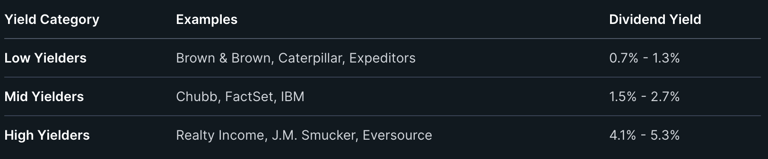
Realty Income leads the pack at 5.3% yield, meaning you earn $5,300 annually on every $100,000 invested. Meanwhile, Brown & Brown only pays 0.7%, giving you just $700 on that same investment.
High-yield dividend aristocrats like Realty Income, Eversource Energy, and J.M. Smucker deliver yields above 4%. These stocks generate meaningful passive income right now. Your lower-yielding aristocrats like Caterpillar focus more on capital appreciation and smaller dividend payments.
Spotlight: Dividend Aristocrats That Truly Pay Enough to Matter


High-yield Dividend Aristocrats offer a rare combination of dependable dividend growth and meaningful income today. Understanding which stocks deliver the best yields and how they balance growth with payouts helps you build a portfolio that works harder for your money.
Examples of High-Yield Dividend Aristocrats: Stocks like FMC, LYB, and SFL
Some dividend stocks stand out not because of flashy stories, but because their yields are meaningfully higher than the market while still being backed by real operating businesses. Companies like FMC, LyondellBasell (LYB), and SFL Corporation often catch investors’ attention for this exact reason.
FMC Corporation (FMC) operates in the agricultural chemicals space, supplying crop protection products to farmers worldwide. Its dividend yield (yielding at 12%+ currently) has historically sat above the broader market average, reflecting both the cyclical nature of agriculture and investor caution during downturns. When conditions stabilize, FMC’s cash flows can support attractive income, but the stock also highlights why yield alone isn’t enough—you need to understand earnings volatility and payout sustainability.
LyondellBasell (LYB) is one of the highest-yielding (yielding at 10%+ currently) large-cap chemical companies in the U.S. market, frequently offering yields in the mid-to-high single digits. LYB’s dividend is supported by strong cash generation during favorable commodity cycles, but it’s also sensitive to global demand and energy prices. This makes it a classic example of a stock that looks appealing on yield but requires careful analysis of free cash flow and debt levels before relying on it for long-term income.
SFL Corporation (SFL) operates in the maritime and shipping sector, leasing vessels across energy, dry bulk, and container shipping markets. SFL is known for distributing a sizable portion of its cash flow to shareholders, often resulting in an above-average dividend yield (yielding at 10%+ currently) . However, shipping is inherently cyclical, and dividend stability depends heavily on long-term charter contracts and balance sheet discipline.
These stocks demonstrate an important lesson for income investors: high yield can enhance your income, but only if it’s backed by durable cash flow and manageable risk. FMC, LYB, and SFL can play a role in an income-focused portfolio—but only when paired with proper due diligence, diversification, and realistic expectations about volatility.
Dividend Growth vs. Yield: Striking the Right Balance
You need to weigh current yield against future dividend growth when selecting aristocrats. A stock yielding 5% today with minimal growth potential may underperform a 2.5% yielder that consistently raises dividends by 8% annually. Over time, the lower-yielding stock could deliver higher total returns and greater income.
The best dividend stocks balance both factors. Look for companies with dividend payout ratios between 40% and 70% of earnings. This range provides room for dividend increases while maintaining financial flexibility. Companies paying out 90% of earnings leave little cushion during downturns.
Higher yields often signal slower growth or higher risk. A 5% yield might indicate market concerns about the business rather than generosity. Check whether the yield has risen due to dividend increases or stock price declines. Price drops creating yield spikes deserve extra scrutiny.
Key Factors Impacting Dividend Payouts
Market capitalization affects dividend stability. Large-cap aristocrats typically maintain steadier payouts during economic stress compared to smaller companies. A $100 billion company has more resources to weather temporary challenges than a $10 billion firm.
Cash flow generation matters more than reported earnings. Companies with strong free cash flow can sustain and grow dividend payouts even when accounting profits fluctuate. Check the cash flow statement to verify the business generates enough cash to cover dividends comfortably.
Industry dynamics shape payout potential. Utilities and consumer staples on the Dividend Aristocrats list often yield more because they operate mature businesses with limited growth opportunities. Technology and healthcare aristocrats typically yield less but may offer stronger dividend growth. Your choice depends on whether you need income now or prefer growth for the future.
Smart Strategies for Maximizing Income From Dividend Aristocrats
Building real income from Dividend Aristocrats takes more than just buying stocks with long payout histories. You need smart approaches to portfolio construction, reinvestment tactics, and diversification methods that actually boost your monthly cash flow.
How to Invest in Dividend Aristocrats for Reliable Income
Your first step is picking the right stocks from the roughly 67 companies that qualify as Dividend Aristocrats. Look beyond just the dividend growth streak and examine the average dividend yield each company offers.
Check the price-to-earnings ratio to avoid overpaying. A lower P/E ratio often signals better value, especially when paired with a solid yield.
Dividend yield above 3% for meaningful income
P/E ratios under 20 to avoid overvalued stocks
Dividend growth streak of 30+ years for extra reliability
Spread your investments across 20 to 30 different Dividend Aristocrats in sectors like consumer staples, healthcare, and industrials. This protects your passive income if one or two companies hit rough patches.
Watch out for companies with unusually high yields above 6%. These can signal trouble ahead, not opportunity.
Dividend Reinvestment & Compounding Wealth
Dividend reinvestment plans (DRIPs) turn your payouts into powerful wealth-building tools. Instead of taking cash, you automatically buy more shares with each dividend payment.
This creates compounding magic. Your new shares generate their own dividends, which buy even more shares. Over 20 or 30 years, this seriously boosts your total return.
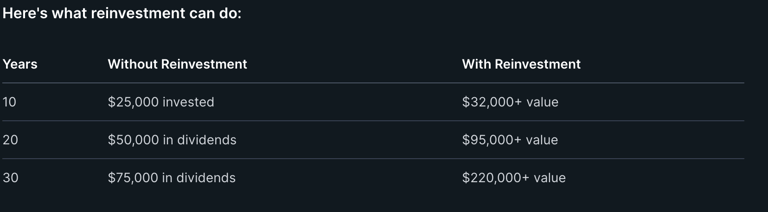
Most brokers offer free automatic reinvestment. Set it up once and forget about it until you actually need the income stream.
Switch from reinvestment to cash payments when you're ready to live off your passive income.
Using ETFs for Easy Diversification: Like ETF IQQQ & SPYI
ETFs give you instant access to dozens of dividend-paying companies in one purchase. The ProShares S&P 500 Dividend Aristocrats ETF (NOBL) holds all the official Aristocrats with a dividend aristocrats ETF approach that's simple and effective.
NOBL charges just 0.35% annually and currently yields around 2%. It automatically adds new Aristocrats and removes companies that break their streak.
The Vanguard Dividend Appreciation ETF (VIG) takes a broader approach with over 300 holdings focused on dividend growth. It yields about 1.8% but offers stronger total return potential.
Compare these popular options:
NOBL: Pure Aristocrats play, moderate yield, strict requirements
VIG: More holdings, lower fees at 0.06%, focuses on growth
IQQQ: Nasdaq-100 focus with 9%+ yield from covered calls
SPYI: S&P 500 income strategy with monthly distributions
Income-focused investors might prefer funds like IQQQ that use options strategies to generate higher yields. Just know these sacrifice some dividend growth for current income.
Start with NOBL or VIG if you want traditional Aristocrats exposure. Add higher-yield ETFs later when you need more cash flow.
Building a Winning Dividend Aristocrat Portfolio in 2026
You need the right tools to find the best dividend aristocrats and smart risk management to protect your money while earning reliable income.
Using the Dividend Aristocrats Spreadsheet and Screening Tools
A dividend aristocrats spreadsheet is your best friend when building your portfolio. You can download free spreadsheets that list all 68 current dividend aristocrats with their dividend yields, payout ratios, and growth rates in one place.
Sort your spreadsheet by these key metrics:
Dividend yield (aim for 3% or higher)
Payout ratio (stay under 70%)
5-year dividend growth rate (target 5% or more annually)
Return on equity (look for 15% minimum)
Many dividend investors make the mistake of chasing the highest yields. Instead, you want companies that balance good current income with steady dividend growth. A 3.5% yield growing at 7% annually beats a 5% yield growing at 2% within just a few years.
Managing Risks and Setting Realistic Expectations
You should never put all your money into just three or four dividend aristocrats. Spread your money across at least 10 to 15 different companies in different sectors.
Watch out for companies with payout ratios above 80%. They might be borrowing money to pay dividends or skipping important business improvements to keep shareholders happy. Both situations end badly.
Check each company's earnings growth every quarter. Your dividend can only grow if the company's profits grow too. Set a rule to review your holdings every six months and replace any aristocrat that cuts or freezes its dividend.
Don't expect dividend aristocrats to double your money overnight. These are steady income producers that typically return 8% to 12% annually when you combine dividends with stock price growth. That's solid performance that compounds beautifully over time, especially when you reinvest those dividends.
Final Takeaway: High Yield Isn’t the Goal—Sustainable Income Is
High dividend yields look exciting on paper, but real wealth isn’t built by chasing the biggest number on a stock screener. It’s built by owning businesses that can keep paying you through good markets and bad ones.
The difference between a reliable income portfolio and a dividend disaster comes down to fundamentals:
Cash flow that actually covers the dividend
Reasonable payout ratios
Manageable debt
A business model that survives recessions
When you ignore these, you don’t just risk a dividend cut—you risk watching both your income and principal disappear at the same time.
What You Should Do Next (If You’re Serious About Income)
If you’re just getting started, don’t overcomplicate this:
Start with financially healthy dividend payers, not flashy yields
Use a brokerage that supports long-term investing and dividend reinvestment
Educate yourself enough to avoid the obvious traps most beginners fall into
One Last Reality Check
You don’t need dozens of stocks.
You don’t need insider tips.
And you definitely don’t need a 20% yield.
You need a simple, repeatable system that prioritizes sustainability over hype.
👉 Start boring. Stay consistent. Let compounding do the work.
That’s how real dividend income is built.
Contact
kbgholston445@gmail.com
© 2025. All rights reserved.